Vehicle categories: important for parking and on the highway too
 29. 07. 2026.
The vehicle category must be specified in two places if you are traveling by car: when buying a parking ticket and when purchasing a motorway vignette. The two classifications are not the same, and in neither case does it not matter what you choose. For parking, the category directly determines the hourly fee; for the vignette, the wrong category counts as unauthorized road use. In this article, we go through both, and also what to look for in the registration certificate.
For parking, the category also determines the price
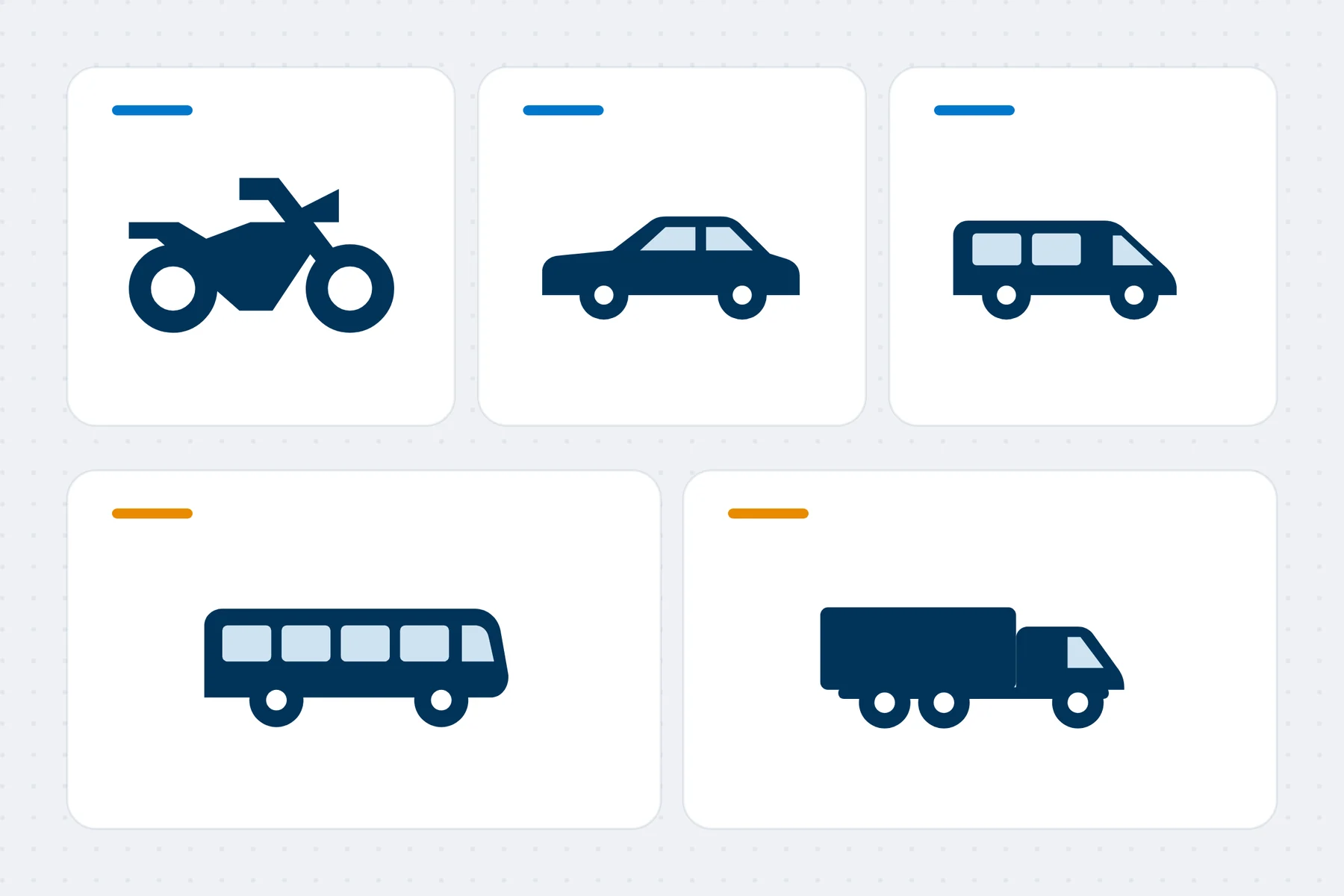
For public parking in Hungary, there are five vehicle categories, and the parking ticket always applies to the selected category:
- Passenger car
- Motorcycle
- Van or light truck under 3.5 tons
- Truck over 3.5 tons
- Bus
The hourly fee is set separately by each zone for each category, and the difference is not small. In Budapest, larger vehicles typically pay three times the passenger car rate: where a passenger car costs 600 forints per hour, a bus and a truck cost 1800 forints, and in zones with a 300-forint rate, they cost 900 forints. This is also the typical ratio nationwide: among the 231 zones we manage where both rates are listed, the hourly fee for buses is three times that of passenger cars, and in the most expensive case it is more than five times higher.
Two categories behave differently:
- Van: the light commercial vehicle under 3.5 tons pays almost everywhere the same as a passenger car; among the 322 zones, the two rates differ in only 42.
- Motorcycle: in most zones it is not subject to a fee; altogether there are only 79 zones with any motorcycle rate at all, and even among those, only four are cheaper than the passenger car rate.
Which categories can be ticketed at all also varies by zone. Passenger cars are available in 297 zones, vans in 273, buses in 235, trucks in 205, and motorcycles in 79. Where a category does not appear, no ticket can be purchased for that vehicle type in that zone.
Which category should you choose when parking?
The classification is based here too on the registration certificate, specifically the J field, that is, the vehicle category, and the maximum permissible gross weight:
- M1 passenger car: passenger car category, regardless of whether it is a sedan, station wagon, or large SUV.
- N1 truck up to 3.5 tons: van or light truck. This also includes company cars with passenger-car bodywork but registered as trucks.
- N2 and N3 trucks over 3.5 tons: truck category.
- M2 and M3: bus.
- L category: motorcycle.
When buying a parking ticket here, in addition to entering the license plate number and zone, you also have to select the vehicle type, and the system only offers the categories that are actually subject to fees in the given zone.
Vignettes use a different logic
The fee categories for the motorway vignette do not follow the parking categories; here there are letter codes, and the number of seats also matters:
- D1M: the category for solo motorcycles. The short-term entitlement is cheaper here, but the price of the annual national and county vignette is the same as for D1.
- D1: a passenger car with a maximum permissible gross weight of up to 3.5 tons and capacity for up to 7 people including the driver, as well as its trailer.
- D2: any passenger car capable of transporting more than 7 people, as well as light trucks (N1) up to 3.5 tons and motorhomes.
- U: the trailer of vehicles in the D2 and B2 categories. This must always be purchased for the trailer’s own license plate, not for the towing vehicle’s.
- B2: the category for buses. Since February 2024, buses no longer pay with an e-vignette, but through the HU-GO system based on distance traveled.
The most important difference compared with parking: for the vignette, the S.1 field, that is, the number of seats counted including the driver, also determines the category. A seven-seater minivan is D1; an eight-seater from the same model family is already D2, while for parking both fall into the same category.
Do you need a separate vignette for a trailer?
This is the most frequently searched question on the topic, and the answer is simple: if the towing vehicle is D1, no separate vignette is needed for the trailer. The legislation also includes the trailer of a passenger car in the D1 category, so a garden trailer, boat trailer, or small caravan attached behind a family car may travel with the existing D1 entitlement.
A separate U-category vignette is only required if the towing vehicle is D2 (for example, a nine-seater minibus, an N1 light commercial vehicle, or a motorhome) or B2. In that case, two entitlements are needed: one for the towing vehicle’s license plate in its own category, and one in U category for the trailer’s license plate.
Motorhome, minibus, light commercial vehicle
- Motorhome: according to the vignette fee categories, it belongs to D2. From January 1, 2026, an important change is that motorhomes over 3.5 tons have also been brought into the e-vignette system; the HU-GO onboard unit or route ticket can no longer be used for them.
- Nine-seater minibus: even if it is under 3.5 tons, it is D2 for the vignette because it can transport more than seven people. For rented vehicles, it is worth checking the registration certificate before departure.
- N1 light commercial vehicle: a two-seat company car converted from a passenger car is typically N1 in the registration certificate, meaning D2 for the vignette and van for parking, even though the bodywork is the same as the passenger-car sibling model’s.
What happens if you enter the wrong category?
For parking, the ticket applies to the category you entered, so a ticket bought at a passenger-car rate does not cover a bus. For the vignette, an entitlement with the wrong category counts as unauthorized road use, which means a surcharge is charged. If you notice the mistake in time, it can be corrected through the National Toll Payment Services customer service by paying the price difference and the reissue fee, but if the surcharge has already been imposed, later correction does not exempt you from payment.
It is worth checking the current vignette prices and the official description of the categories on the National Toll Payment Services website, because the fees change every year on January 1.
Check in advance how much the fee will be
You can check parking hourly fees in advance by category: in our parking zone finder, the fees for passenger cars, vans, buses, and trucks are listed separately for each zone, together with the operating hours. We have collected the rules for the larger cities on the city pages, for example on the Budapest parking page.
The ticket purchase itself is automated and can be handled from your browser without coins: enter the zone, license plate number, and vehicle type, pay, and the permit becomes valid immediately, with inspectors seeing it digitally. If you are using it for the first time, the whole process can be reviewed in a few minutes on our how it works page.