Attractions in Kecskemét and Parking Information 2026
 26. 07. 2026.
 Kecskemét parking zones and hourly rates
Kecskemét is the seat of Bács-Kiskun County and the Kecskemét District, as well as one of the regional centers of the area between the Danube and Tisza rivers. It lies halfway between Budapest and Szeged, making it an easily accessible destination from both directions. Trade, animal husbandry, sandy-soil gardening, viticulture and fruit cultivation, as well as industrial development, all played important roles in the city’s history.
Kecskemét may be especially interesting for those who enjoy discovering the past of Great Plain towns, Art Nouveau architecture from the turn of the century, and the settlement structure of market towns. Several buildings in the center have been renovated, while motor traffic is being banned from an increasingly large area. If you arrive by car, it is therefore worth checking the rules of parking in Kecskemét in advance, then continuing your sightseeing on foot.
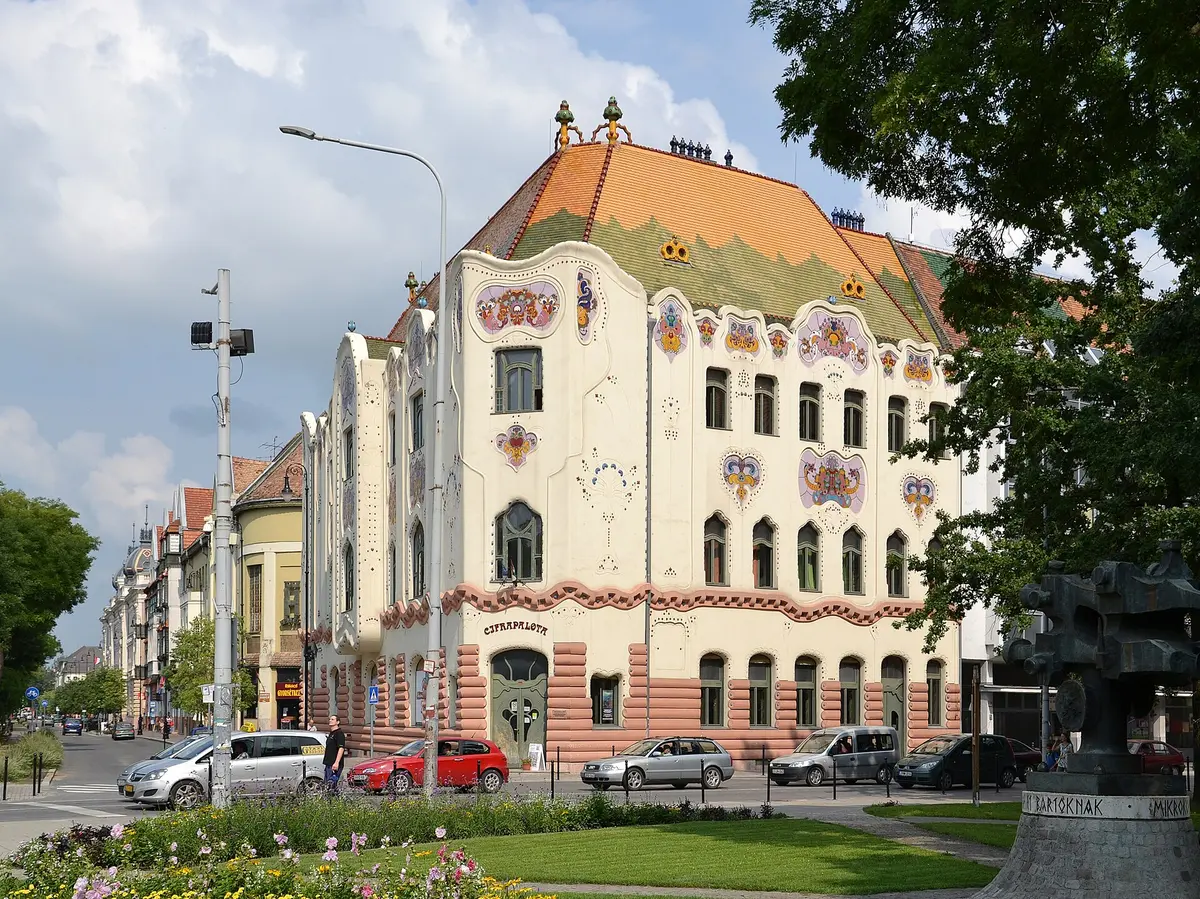
The Art Nouveau city center
Kecskemét’s spectacular development began at the end of the 19th century. Flourishing agriculture and the industrial boom following the Austro-Hungarian Compromise created a significant bourgeois class, which enriched the city center with numerous Art Nouveau buildings at the turn of the century. A walk through the city center is therefore a good starting point for gaining an impression of Kecskemét’s economic and social transformation, as well as of the era when the settlement’s urban core took shape.
Most of the buildings in the center have been renovated, and motor traffic is being banned from an ever larger area. For this reason, it is worth exploring this part of the city on foot: leave your car in a legally usable parking space, then take a walk to see the turn-of-the-century cityscape. This way, you do not have to look for a new parking space at every single stop while discovering the center.
The Church of the Friars and the origin of the city’s name
The Church of the Friars is considered Kecskemét’s oldest local church, whose patron saint in the 13th century was Saint Nicholas the bishop. According to one explanation linked to the city’s name, the bishop gave goats to the newly converted believers for breeding. Former historical records referred to the settlement as Aegopolis, meaning Goat City, and its old branding iron matched the sign of the Capricorn constellation.
There are also other linguistic interpretations of the origin of the name. The original form may have been Kecskemed, in which the suffix med may have meant a dry bed or a stream that occasionally dries up. According to another opinion, mét means passage or march. If you are exploring the historic city center, it is advisable to include the Church of the Friars in your walking route.
The old market square and the past of the trading town
Kecskemét lay along an important trade route on the Great Plain, so it soon stood out among the surrounding settlements as a place for collecting customs duties and holding markets. The place was already mentioned as a town in the 14th century. One of the foundations of its development was cattle breeding, along with the cattle, fur, and blacksmithing trade built on it. During the Ottoman occupation, it was in a special position, as it paid taxes directly to the pasha of Buda and also enjoyed his protection.
The old market square also played a role in later Hungarian history. Kecskemét was among the first to join the recruitment of soldiers for the 1848 Hungarian army, and Lajos Kossuth delivered his famous call-to-arms speech here on September 25, 1848. The history of the site clearly shows that the space connected to markets gradually also became an important public venue.
The Reformed church and the 1911 earthquake
One of the most serious natural events in Kecskemét’s history was the earthquake that occurred on July 8, 1911. The quake severely damaged several hundred residential and public buildings, and the Reformed church was among the affected buildings. The disaster caused major damage in the city, so the church’s history is connected not only to its religious role but also to this significant local event.
It is worth combining a visit to the Reformed church with exploring the historic center. The buildings of the city center tell not only of Kecskemét’s development, but also of the ordeals that reshaped the cityscape from time to time. The center is best explored on foot, especially because car traffic has been excluded from several areas.
Sandy-soil gardening and the heritage of the farmstead world
Kecskemét’s development was closely linked to the use of the surrounding sandy landscape. In the first half of the 19th century, several million fruit trees were planted to stabilize the fallow sandy soil, and later the sandy-soil gardening and viticulture characteristic of the region unfolded. When phylloxera caused severe devastation in the country’s upland vineyards, its damage remained insignificant on the looser sandy soil. Larger vineyards developed around the city, laying the foundations for grape and fruit farming.
The outermost zone of the market-town structure was made up of the world of farmsteads, which was followed inward by gardens and orchards, village-like areas, paved small-town streets, and finally the urban center. Kecskemét still has an extensive farmstead area today. A car may be more practical for reaching more distant outskirts, while the city core is better explored on foot.
Kecskemét’s early relics and modern development
The area around Kecskemét was already inhabited in prehistoric times, as indicated by archaeological finds. Bronze Age urns were uncovered during excavations, and Avar graves were found during the construction of the Piarist grammar school. During the Migration Period, several peoples passed through the region, and in the Middle Ages Kecskemét became an increasingly significant settlement as a customs-collecting and market site along a trade route.
In 1950, the city became the seat of Bács-Kiskun County, gaining a significant administrative role. In later decades, smaller industrial plants and factories settled along the ring road surrounding Kecskemét. An important milestone in modern industrial development was the announcement of the establishment of a Mercedes-Benz manufacturing plant in Kecskemét. The historic city center and industrial development together reveal the settlement’s multifaceted character.
Parking in Kecskemét
In Kecskemét, paid parking areas are divided into zones, so after stopping, always check which area’s rules apply to the given location. Payment is typically required on weekdays, and the hourly fee and other conditions may vary by zone. You can review the information on the Kecskemét parking page.
The advantage of mobile parking is that you do not have to look for a parking meter or make sure you have cash. You can start parking on site from your phone, and the parking zone finder can help you identify the correct area.
- 6001 – Kecskemét premium fee zone (6001): 500 HUF/hour (weekdays 08:00–20:00)
- 6003 – Kecskemét Fee Zone I (6003): 360 HUF/hour (weekdays 08:00–18:00)
- 6004 – Kecskemét Fee Zone I (6004): 360 HUF/hour (weekdays 06:00–18:00)
- 6005 – Leisure Center (6005): 240 HUF/hour (every day 08:00–18:00)
The fees are valid at the time of publication of the article, based on data from National Mobile Payment Plc.
Tip: Choose a legally usable parking space near the city center, then explore the Art Nouveau city center and the historic sites on foot. This way, you do not have to look for a new parking space several times in the partly traffic-restricted center.You can start parking on site online with a few clicks, directly from your phone, without a parking meter, cash, or installing a separate application.
The above information is for informational purposes only and may differ from the actual data in certain cases. To view the current daily parking fees, please click the link below!
KECSKEMÉT Parking zone information: 10-18-2026

Fotó: Pudelek (Marcin Szala) / Wikimedia Commons (CC BY-SA 3.0)