Parking in Szentendre 2026: zones and attractions
 04. 08. 2026.
 Szentendre parking zones and hourly rates
Szentendre lies at the gateway to the Danube Bend, where the Visegrád Mountains meet the Szentendre Branch of the Danube. This popular excursion destination in the Budapest metropolitan area attracts visitors primarily with its art, culture, and natural surroundings.
The town is easily accessible from Budapest by car, suburban rail (HÉV), bus, and sightseeing boat. If you are arriving by car, it is worth reviewing the parking rules and the location of the zones in advance so you have more time for sightseeing.
The Szentendre Branch of the Danube and the surroundings of the town center
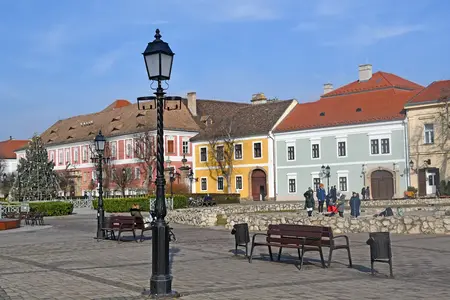
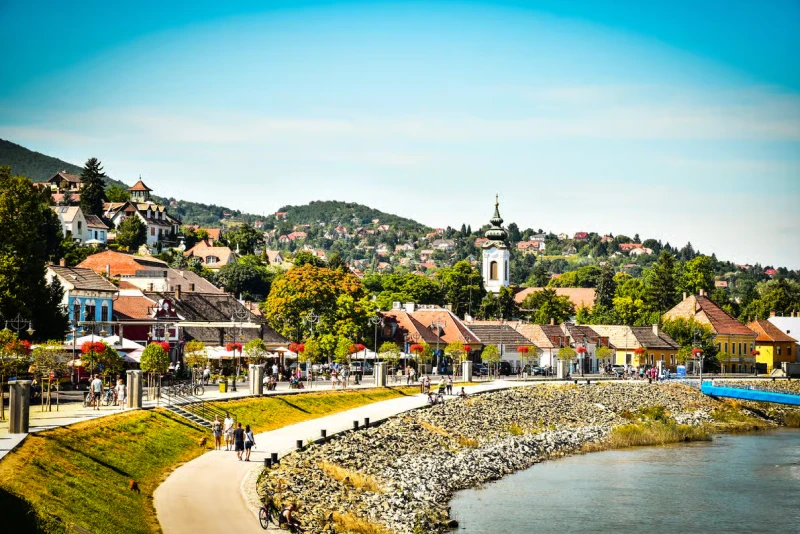
Szentendre's special location is defined by the eastern slopes of the Visegrád Mountains, the Szentendre Branch of the Danube, and the Szentendre Island opposite. The town center lies between the valleys of the Sztaravoda Stream and the Bükkös Stream, in the area bordered by Duna Promenade and Danube Bend Boulevard. This part of the town is a good starting point if you want to discover the riverfront setting and the historic center on foot.
An important part of the town's water system is the streams flowing from the mountains toward the Danube branch, including the Sztelin, Sztaravoda, Bükkös, and Dera streams. If you come by car, it is advisable to park near the town center and explore the closely located parts of the center on foot.
The medieval town center and the church hill
The name Szentendre first appears in a medieval will made out in Sanctus Andreas. The town center of that era developed on the other side of the Bükkös Stream, around the still-standing parish church of St. John the Baptist. During the Árpád dynasty, Szentendre was a royal estate, meaning it also served as one of the traveling royal house's lodgings.
The settlement's center was defined by a church and the royal lodging standing nearby. The Árpád-era church was built on the hill beside the Bükkös Stream, and between the stream and the hill there may have been a fortified manor house, presumably on or near the site of today's Town Hall. The first private houses appeared on the eastern side of Church Hill, so this area is best explored on foot, paying attention to the historical layers.
Ulcisia and Szentendre's Roman heritage
The first settlement by name known in the area of today's Szentendre was Ulcisia, which was associated with a Roman auxiliary camp, a limes tower, a smaller service settlement, and villa estates. The villas were home to officials from Aquincum and veterans, including the largest currently known villa building in Pannonia. The fort served as the station of the Cohors militaria nova Surorum.
The settlement was established as part of the limes running along the Danube and was a control point on the stretch between Dunabogdány and Óbuda. It played an important role in the defense of Pannonia along the Danube Bend. The name Ulcisia comes from the Illyrian word ulk, meaning wolf, which is why it is also known in Hungarian as Farkasvár. To understand the Roman past, it is worth considering the town's history and its Danube-side location together.
Prehistoric and Migration Period relics
In the area of Szentendre, settlements created independently in different periods succeeded one another. These were typically established near the region's four larger watercourses and were often connected to transport along the Danube. The Ferenczy Museum holds stray finds from the Bronze and Iron Ages, and an urn cemetery from the Bronze Age is known on Pap Island.
After the Roman period, the area was probably uninhabited for a longer time, but graves have survived from the fifth century. Lombard finds and a cemetery with one hundred burial places were also uncovered in the vicinity; this is the largest Lombard cemetery known in Hungary so far. From the later period, Avar metalwork and burial sites from the Conquest period are also known from the elevation of Pap Island.
Town center, Szamárhegy, and the districts
Until the last third of the nineteenth century, Szentendre was a small town whose inhabited area essentially included today's Town Center and Szamárhegy. These two districts are separated from the rest of Szentendre by the main road running along their boundary. If you are mainly interested in the old town center, it is best to explore the surroundings of the Town Center and Szamárhegy on foot.
Over the centuries, smaller settlements were also attached to Szentendre and live on as districts with their traditional names. These include Izbég and Derecske, while Pannóniatelep, Püspökmajor, Pismány, and Szarvashegy were built up on former agricultural areas. To reach the larger, more distant districts, a car may be more practical, but in the center known for its art and culture, walking is the obvious choice.
Parking in Szentendre
Szentendre's paid parking system is divided into zones, and hourly rates and payment conditions may differ by area. In the designated areas, payment is typically required on weekdays, so always check the on-site information after arriving. You can review the information for the town on the Szentendre parking page.
Mobile parking is a convenient solution because you do not need to look for a parking meter or small change. If you are not sure which area you parked in, the parking zone finder can help you identify the correct zone.
- 2012 – Szentendre Zone II: 600 HUF/hour (every day 09:00–20:00)
- 2013 – Szentendre Zone III: 780 HUF/hour (every day 09:00–20:00)
The rates are valid at the time of publication of the article, based on data from Nemzeti Mobilfizetési Zrt.
Tip: If you want to see the Danube promenade, the Town Center, and the area around Church Hill, choose a parking space close to the center, then explore the nearby attractions on foot.
You can also start parking on the spot online with just a few taps directly from your phone, without a parking meter, cash, or installing a separate app.
Last updated: 08. 09. 2026.
The above information is for informational purposes only and may differ from the actual data in certain cases. To view the current daily parking fees, please click the link below!
SZENTENDRE Parking zone information: 10-24-2026