Kaposvár 2026: Csiky Gergely Theatre, Lake Deseda and parking
 15. 09. 2026.
 Kaposvár parking zones and hourly rates
Kaposvár is one of the important economic, cultural, educational, and sports centers of Southern Transdanubia, and it is also the seat of Somogy County and Kaposvár District. The university city, located along the Kapos River in the Somogy Hills, offers historical monuments, theaters, museums, and natural surroundings to visitors.
The city is also a good destination for those interested in the medieval past, civic urban development, or the Zselic landscape. If arriving by car, it is worth finding out in advance about the parking rules and the location of the paid zones, so you will have more time to explore Kaposvár.
The surviving remains of Kaposvár Castle
A defining relic of Kaposvár’s medieval history is the castle built along the Kapos River. The fortress, with a square floor plan, was built in the Middle Ages; later it was transformed from an earthwork fort into a stone castle, and its bastions were completed during the Turkish era. Due to the marshy surroundings, it was difficult to approach, so in times of danger it provided shelter for the local residents.
The Ottomans captured it after a five-day siege, and the city was liberated from Turkish rule only after a long time. The castle, damaged in the wars, was later demolished, and some of the remaining ruins were also torn down. Today, the remains of two bastions, the southeastern round bastion and the southwestern square corner tower, are visible. It is worth visiting the historical site as part of a walking tour of the city.
The memory of the Benedictine monastery in Kaposszentjakab
The Benedictine monastery founded in Kaposszentjakab, in the present administrative area of Kaposvár, evokes the city’s early ecclesiastical role. It was established by Otto, also known as Atha, the Somogy ispán, and King Solomon and Duke Géza also attended its consecration. Other kings later visited the ecclesiastical center frequently, and their visits contributed to the development of the settlement.
The history of the monastery is also important because Kaposvár functioned as an ecclesiastical center from the early Middle Ages onward. Kaposszentjakab was later annexed to the county seat, so the former settlement is now an integral part of the city’s past. If you would also include historical monuments outside the city center in your program, it is advisable to treat this site as a separate destination and plan the journey there by car.
Csiky Gergely Theater and the civic city
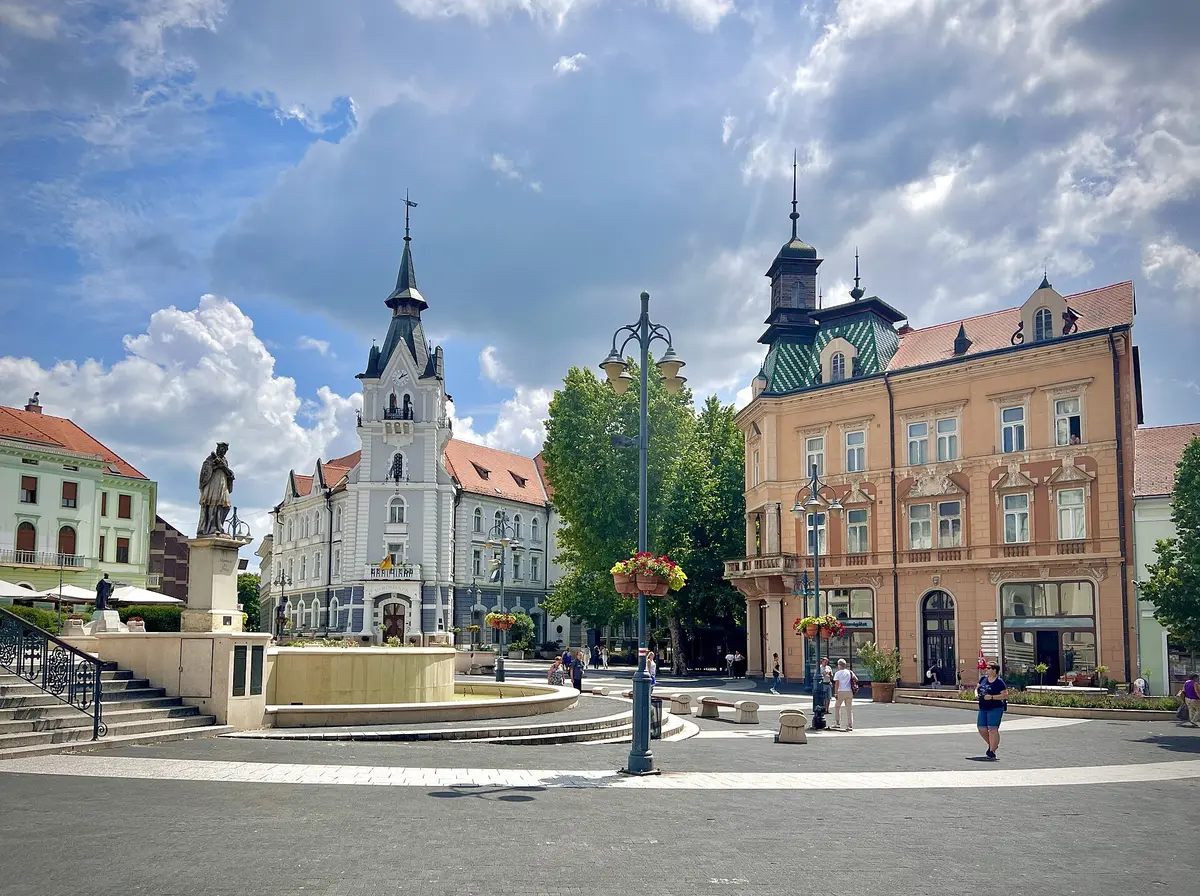
Kaposvár’s intensive development began after the Austro-Hungarian Compromise: the population grew, public institutions were built, and the conditions for rail and road transport were established. The settlement was declared a town with municipal rights, while its industrial and economic role also strengthened. An important urban relic of this civic era is the building of the new city hall, which was inaugurated at the beginning of the twentieth century.
Not long afterward, the Csiky Gergely Theater opened. Its company became a defining player in Hungarian theater life in the second half of the twentieth century, making the building one of the important points of Kaposvár’s cultural identity. It is worth including the city hall and the theater in a walking program so that you can also feel the atmosphere of the county seat’s civic development along the way.
Lake Deseda and the arboretum
In the northern part of Kaposvár lies Lake Deseda, which, with its long water surface, is a prominent element of the city’s natural surroundings. There is also an arboretum beside the lake, so the site can be a good addition to a city tour focused on historical and cultural sights. It is worth considering even if, after your downtown program, you want to see the landscape surrounding Kaposvár more closely.
The lake is a destination of a different character from the central city sights, so it is advisable to set aside separate time for it. If arriving by car, you can first visit the historical sites, then continue toward the northern part of the city as a separate stage. Together, Lake Deseda and the arboretum show well that near Kaposvár, urban culture and the Somogy landscape are directly connected.
The seven hills and the Zselic region
Kaposvár lies in the valley of the Kapos River, which separates the hilly areas of Outer Somogy and Zselic, as well as on the slopes of the two landscape regions. According to legend, it was built on seven hills, similar to ancient Rome. The hills are named Kecel, Körtönye, Lonka, Iszák, Kapos, Róma, and Ivánfa, although not all local traditions agree on the list. Locals call these hills mountains.
Today, the hills make up the southern districts of Kaposvár, and the Zselic Landscape Protection Area extends across the southern part of the city. Several nearby streams flow into the Kapos, including the Berki, Töröcske, and Zselic streams. If you are also curious about the city’s geographical character, driving toward the southern districts will let you see Kaposvár from a different side than on a purely downtown walk.
Parking in Kaposvár
The paid parking area of Kaposvár is divided into several zones, and the hourly rate varies by zone. Before stopping, always check the on-site signs and also see the city’s parking page so you can start parking based on the information for the given area.
The advantage of mobile parking is that you do not need to look for a parking machine or small change. The parking zone finder can help you choose the right area, but always compare the provided data with the on-site signs.
- 8201 – Kaposvár Zone 1: HUF 500/hour (weekdays 08:00–18:00, weekends 08:00–12:00)
- 8202 – Kaposvár Zone 2: HUF 350/hour (weekdays 08:00–18:00, weekends 08:00–12:00)
- 8203 – Kaposvár Zone 3: HUF 500/hour (weekdays 06:00–18:00, weekends 06:00–12:00)
- 8204 – Kaposvár Zone 4: HUF 500/hour (weekdays 08:00–18:00, weekends 08:00–12:00)
The rates are valid according to the data of Nemzeti Mobilfizetési Zrt. at the time of publication of the article.
Tip: It is worth organizing the city hall, the Csiky Gergely Theater, and the central historical monuments into a walking program. Plan a separate driving section for Lake Deseda and the southern, Zselic districts, and when parking, always check which paid zone you stopped in.
You can start parking on the spot with just a few clicks, directly from your phone online, without a parking machine, cash, or installing a separate app.
The above information is for informational purposes only and may differ from the actual data in certain cases. To view the current daily parking fees, please click the link below!
KAPOSVÁR Parking zone information: 10-25-2026

Fotó: Sharon Hahn Darlin / Wikimedia Commons (CC BY 4.0)