Békéscsaba 2026: Mihály Munkácsy Museum, Great Lutheran Church and Parking
 13. 10. 2026.
 Békéscsaba parking zones and hourly rates
Békéscsaba is a cultural and transport hub in the Southern Great Plain. Its sites associated with Mihály Munkácsy, churches and vibrant Slovak traditions offer plenty to see, even for visitors interested in art or the city’s history.
The name of the city may also be familiar to food lovers thanks to Csabai sausage and the festival devoted to it. If you’re arriving by car, it’s worth checking parking options in advance so you can focus on your plans once you get there.
Mihály Munkácsy Museum and Memorial House
Mihály Munkácsy lived and worked in Békéscsaba as a child, so exploring places connected to the painter’s life is an obvious choice during a visit to the city. The museum named after him is dedicated to preserving his legacy; the building opened in 1899 and was renovated in 2007. If you’re interested in the city’s cultural past, this is a good place to start.
The Mihály Munkácsy Memorial House offers another way to get closer to the painter: 21 of his paintings are housed here. His younger sister, Gizella, once lived in the house, and Munkácsy regularly visited her. The museum and memorial house make a particularly good combination if you’d like to do more than visit a few buildings and also spend time exploring the story of an artist with ties to Békéscsaba.
The Great Lutheran Church and the Small Church
The Great Lutheran Church in Békéscsaba is the largest Lutheran church in Central Europe. Its architecture features Zopf and Empire elements, and its interior has two levels of galleries. The spire of its 70-metre-high tower was simplified in 1843 compared with the original design. These details alone show why the church is worth adding to your sightseeing itinerary if you’re interested in religious architecture.
The city’s other Lutheran church, the Small Church, was built in the Baroque style in 1745. Together, the two buildings offer a good opportunity to explore architectural heritage from different periods belonging to the same denomination. Among Békéscsaba’s religious buildings, it’s also worth noting the twin-towered, Neo-Gothic Co-Cathedral of St Anthony of Padua: built in 1910, the church was designed by Antal Hofhauser.
Jókai Theatre and the City’s Public Buildings
The Jókai Theatre of Békéscsaba is the first permanent stone theatre in the Great Plain. The building was completed between 1877 and 1879, then rebuilt in 1913. It may interest you for more than its performances: it also holds an important place in the history of the city’s cultural institutions. Cultural life in Békéscsaba began to flourish from the second half of the 19th century, and the theatre is one of the landmarks of that era.
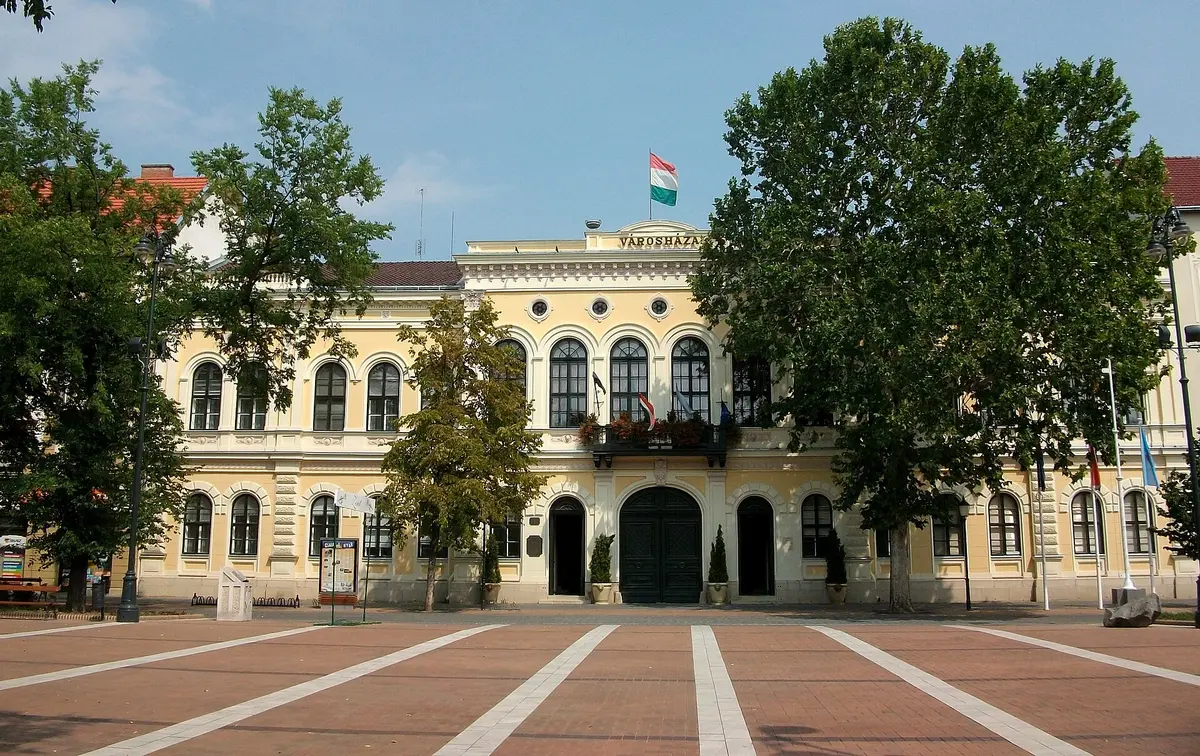
Among the public buildings, look out for the Town Hall, designed in the Romantic style. Built in 1873, it was designed by Ernő Sztraka, while its façade was based on plans by Miklós Ybl. The Hotel Fiume is also associated with Sztraka: built in 1869, the hotel was named after the Nagyvárad–Szeged–Fiume railway line. These places evoke different aspects of the city’s development.
Slovak Country House and Csabai Traditions
Slovak traditions remain an important part of Békéscsaba’s cultural identity. The settlement was depopulated during the Ottoman occupation, then resettled in the 18th century, mainly by Slovak settlers. If you’d like to learn about this part of the city’s past, the Slovak Country House is a good starting point. Built in the 1860s, this traditional dwelling features Baroque and Neoclassical details; its columned porch and lobed gable are distinctive features of the building.
Local traditions also include gastronomy. Csabai sausage, which has Hungarikum status, and the festival devoted to it have earned the city the nickname “the sausage capital.” So you can find a connection to Békéscsaba even if, alongside museums and public buildings, you’re mainly interested in local food and customs.
Sculpture Promenade, Fairy Tale House and Spa
If you’d like to spend some time exploring the city on foot, visit the Sculpture Promenade beside the Élővíz Canal. Its busts depict notable figures from Békéscsaba and people connected to the city, so you can encounter characters from local history along the way. It’s a different kind of activity from visiting a museum: you can stop by whichever figure’s story interests you most and continue at your own pace.
The Fairy Tale House is another distinctive attraction. The building is decorated with sculptures, gingerbread figures and drawings created by visual artist Mihály Schéner. If you’d like to add a swim to your sightseeing, you can also include the Árpád Thermal and Beach Baths in your plans: they were built in 1922 and renovated in 2003. This gives you time for a different kind of stop alongside the cultural attractions.
Parking in Békéscsaba
Békéscsaba has two paid parking zones, with different hourly rates in each. Fees are charged on weekdays only; parking is free on weekends and public holidays. If you’re arriving by car, it’s worth checking which zone you’ve parked in before starting payment.
You can find information about local parking on the city’s parking page. Mobile parking lets you pay on the spot, directly from your phone.
- 5601 – Békéscsaba premium zone: HUF 560/hour (weekdays 08:00–18:00)
- 5602 – Békéscsaba standard zone: HUF 510/hour (weekdays 08:00–18:00)
The rates are based on data from the National Mobile Payment Plc. and were valid when this article was published.
Tip: If you’re arriving by car on a weekday, check your location in the zone finder after parking, as hourly rates differ between paid zones. The Sculpture Promenade is best explored on foot, so you’ll have time to see the busts.
Once you’ve parked, you can start parking online from your phone in just a few taps, without a meter, cash or installing an app.
The above information is for informational purposes only and may differ from the actual data in certain cases. To view the current daily parking fees, please click the link below!
BÉKÉSCSABA Parking zone information: 10-14-2026

Fotó: Barna Rovács (Rovibroni) / Wikimedia Commons (CC BY-SA 3.0)