Parking in Zamárdi 2026: zones and attractions
 25. 08. 2026.
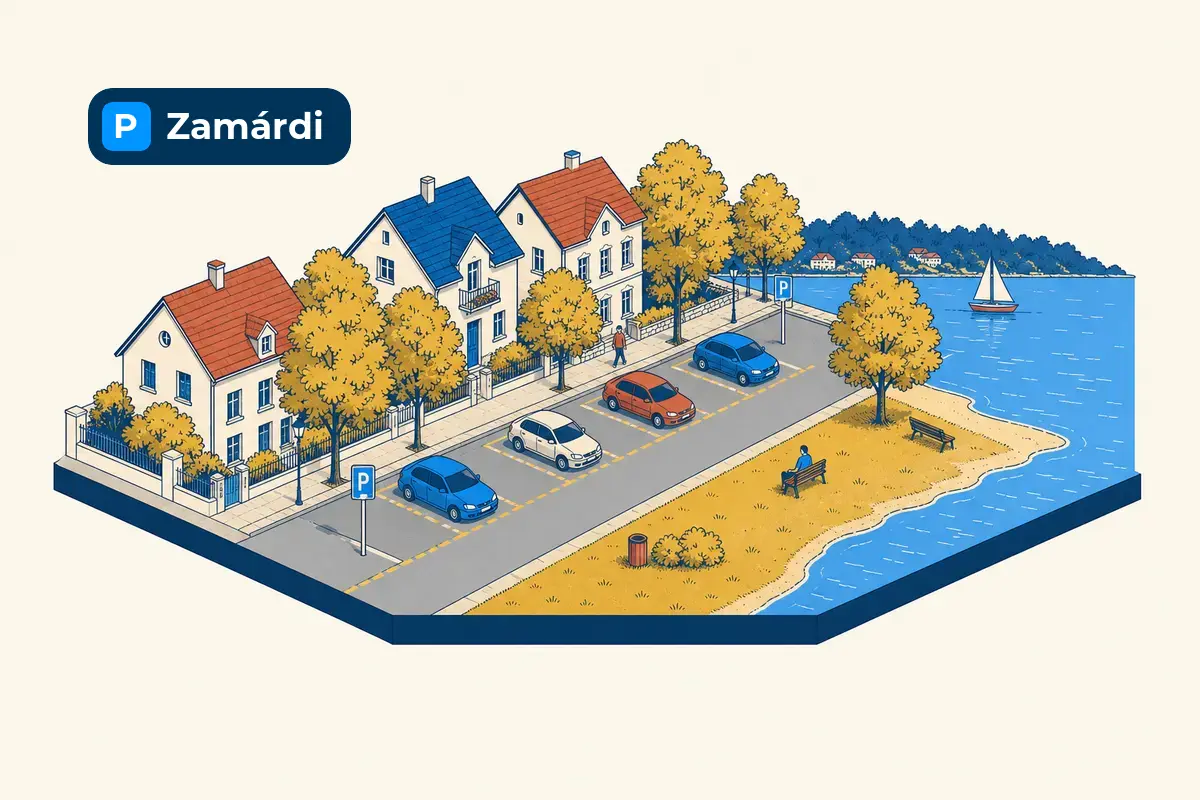
Zamárdi is located on the southern shore of Lake Balaton, between Siófok and Balatonföldvár. With its grassy beach, summer festivals and panoramic views of the Tihany Peninsula, it is an appealing destination for beachgoers, hikers and festivalgoers alike.
Alongside the waterfront, the Kőhegy Lookout, the distinctive Szamárkő rock and the town’s rich history also offer plenty to explore. If you are arriving in Zamárdi by car, it is worth checking the parking regulations, as fees and operating hours in paid areas may vary by zone and season.
Zamárdi’s Great Beach and the panorama of Lake Balaton
Zamárdi’s best-known feature is its three-kilometre-long grassy Great Beach, a popular place for swimming in Lake Balaton. The Tihany Peninsula dominates the central panorama, making the waterfront a place not only for swimming but also for enjoying views of the opposite shore. It is worth exploring the long stretch of shoreline on foot, especially if you plan to spend more time right by Lake Balaton.
Bathing culture in Zamárdi dates back to the early twentieth century, and the development of the resort area accelerated in the 1930s. Today, the town has become one of the main hubs of tourism around Lake Balaton. In summer, beaches and events can mean heavier traffic, so if you are arriving by car, it is advisable to check which parking zone is currently in effect.
Kőhegy Lookout
Kőhegy, rising southwest of the town, is one of Zamárdi’s most important hiking destinations. The hill is a wine-growing area with wine cellars, weekend houses and a stone cross. A hiking trail leads to the lookout at the top, so it is best to cover the final part of the route on foot. From the top, visitors can enjoy sweeping panoramic views.
The lookout was built to commemorate the millennium, on the site where the press house of Tihany Abbey once stood. The old building was destroyed in the period after the Second World War, and its materials were taken away. Kőhegy’s history goes back even further: it was inhabited by both the Celts and the Romans, and finds from the Celtic urn cemetery are held by the Hungarian National Museum.
Szamárkő, Zamárdi’s distinctive rock
Szamárkő is located at the western end of the town, at the edge of Kiserdő. On the rock, whose surface is rippled and heavily worn, there is a trough-like hollow and a so-called fire pit, alongside a carved stone and a smaller stone bearing two unusual impressions. The rock formed locally: during post-volcanic activity, rising vapours, gases, hot water and minerals cemented the sand into solid rock. Fossilised snails can also be seen in the grey sandstone.
Several legends are associated with the formation. One story explains the markings as the footprints of Jesus and a donkey, while other traditions link the stone to the Tihany volcano, the flood or the Knights Templar. Szamárkő was also an ancient sacrificial site and a former boundary marker.
Archaeological remains and Zamárdi’s past
The area of Zamárdi has been inhabited for thousands of years. Archaeological excavations have uncovered prehistoric, Bronze Age, Celtic, Germanic and Roman finds, while the town’s most significant archaeological relic is its Avar-period cemetery. It is the largest Avar-period site in the Carpathian Basin, with a particularly rich collection of finds, so the history of the settlement reaches back to periods long before bathing culture developed around Lake Balaton.
The town’s name appeared in medieval documents in several forms, with its present form established later. The former settlement of Egyházas-Zamárd was severely affected by the Ottoman destruction: its church and houses were demolished, and today a wooden oak cross stands on the site of the church. The area remained depopulated for a long time, and the settlement’s life began anew in the eighteenth century with the arrival of new families.
Bathing culture, festivals and a wine-growing landscape
Along with its beaches on Lake Balaton, popular summer events have helped make Zamárdi known throughout the country. The town is also well known among festivalgoers thanks to the Strand Festival and, previously, Balaton Sound, which was held here until 2024. Traffic can increase during events, so it is especially important to check parking information around the venues.
The town is part of the Balatonboglár wine region, and wine-growing has a long tradition in the surrounding area. Farming, viticulture, animal husbandry and fishing shaped local livelihoods for a long time, before tourism around Lake Balaton became more prominent. The vineyards and wine cellars on Kőhegy still serve as reminders of this heritage.
Parking in Zamárdi
Zamárdi’s paid parking area is divided into several zones, and fees and operating hours may vary by zone and season. Parking fees apply every day, including weekends and public holidays, so always check which zone you are in after parking. You can review local information on the Zamárdi parking page.
With mobile parking, you do not need to look for a parking meter or coins; you can start your parking session directly from your phone. The parking zone finder can also help you identify the correct area.
- 8619 – Zamárdi Zone 1: HUF 450/hour (daily 09:00–21:00)
- 8620 – Zamárdi Zone 2: HUF 450/hour (daily 09:00–21:00)
- 8629 – Zamárdi Zone 4: buses/campervans only, HUF 900/hour (daily 09:00–21:00)
- 8634 – Zamárdi Zone 5: HUF 450/hour (daily 09:00–21:00)
- 8635 – Zone V: HUF 450/hour (daily 08:00–21:00)
The fees are based on data from National Mobile Payment Plc. and were valid when this article was published. The fees and operating hours listed apply to the summer season: outside the season, some zones are free, while others have lower fees. You can find the current fees on the Zamárdi parking page.
Tip: It is worth exploring the long shoreline of the Great Beach on foot, and a hiking trail leads to the Kőhegy Lookout. After parking, check the zone and bear in mind that parking in Zamárdi may be subject to a fee on weekends and public holidays too.
You can start parking online at the location in just a few taps, directly from your phone, without a parking meter, cash or installing an app.
Last updated: 27. 10. 2026.
The above information is for informational purposes only and may differ from the actual data in certain cases. To view the current daily parking fees, please click the link below!
ZAMÁRDI Parking zone information: 15/11/2026