Hajdúszoboszló 2026: Hungarospa, Bell House and parking
 22. 09. 2026.
 Hajdúszoboszló parking zones and hourly rates
Hajdúszoboszló is one of the most popular resort towns in the Great Plain, known primarily for its thermal water and Europe’s largest spa complex. It can be a good choice if you are looking for medical, wellness, or entertainment services, but you can also take in several city sights around the spa.
The settlement is easily accessible from Debrecen via the main road, which is why many people arrive by car. Before setting off, it is worth reviewing the parking rules, and on site checking which paid zone you have parked in.
Hungarospa and the Hajdúszoboszló spa
Hajdúszoboszló’s main tourist attraction is Hungarospa, Europe’s largest spa complex. Its units include the open-air Beach and the Aquapark, and thanks to continuous development it also offers medical, wellness, and entertainment services. The town’s fame is closely linked to its thermal water, so the spa can be a central stop even if you are only visiting for a short time.
The complex is located near Bánomkert, where hotels, apartments, and private accommodations have also been built. If you arrive by car, it is advisable to look for a designated parking space near the spa, then explore the nearby attractions on foot. This makes it easy to combine Szent István Park and the Bell House with a visit to the spa.
The history of the thermal water
A defining turning point in Hajdúszoboszló’s life came when thermal water burst out during a test drilling instead of crude oil or natural gas. The sulfurous and iodine-rich water was quickly put to use by local residents, especially to relieve joint complaints and lower back pain. Due to its healing effects, the thermal water was soon classified as medicinal water, and the settlement later officially became a certified spa town.
The spa and beach built around the medicinal water fundamentally transformed the former Hajdú town. The development of spa tourism created accommodations, holiday homes, and a new district center, and Hajdúszoboszló became one of Hungary’s best-known health tourism destinations. Visiting the spa is therefore interesting not only for relaxation, but also for learning about the town’s modern history.
Szent István Park and the statue of Ferenc Pávai-Vajna
Directly opposite the main entrance of the Spa Baths is Szent István Park, making it an obvious stop before or after a spa visit. Here stands the statue of Ferenc Pávai-Vajna, who discovered the spa and thermal water of Hajdúszoboszló. The monument is directly connected to the discovery that launched the town’s transformation into a spa resort.
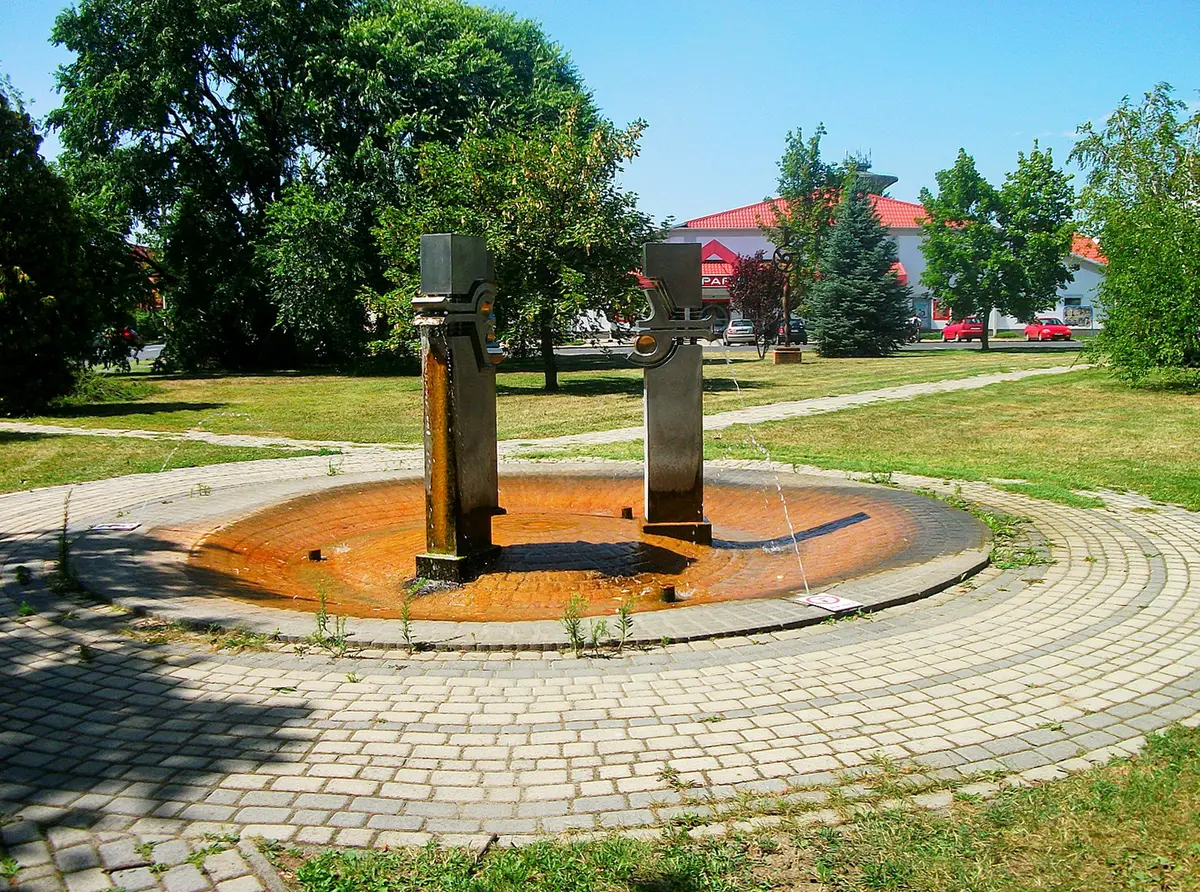
The park also features a fountain and the Bell House, so you can see several attractions close to one another. If you come by car, there is no need to look for a new parking space between each stop: after parking near the spa, it is worth exploring this area on foot. The park also provides a good transition between the spa complex and Hajdúszoboszló’s more modern architectural creation.
The special collection of the Bell House
The Bell House standing in Szent István Park is Hajdúszoboszló’s newest architectural creation. This open, circular building was created to preserve and present the legacy of the Oborzil bell. Inside are the aluminum bells left to the town, making the building at once a city memorial and a distinctive architectural sight.
During the design process, architect Zoltán Rácz combined several symbolic systems. The pillars of the Bell House refer to the seasons, the cardinal directions, and the starting points of the bell system. The structure is surrounded by three wooden signposts called Turulo, Csodaszarvas, and Lélekmadár. Because of its proximity to the spa’s main entrance, the Bell House is easiest to include in a city itinerary on foot.
Bánomkert, Mátyás király promenade, and the town’s waters
Bánomkert is the district of holiday apartments and hotels, and its development was directly supported by the nearby Spa Baths and the discovery of thermal water. An integral part of it is Mátyás király promenade, where vendors and large hotels operate. To get to know the area around the spa, it is worth exploring this district on foot, especially if you have already found a suitable parking space nearby.
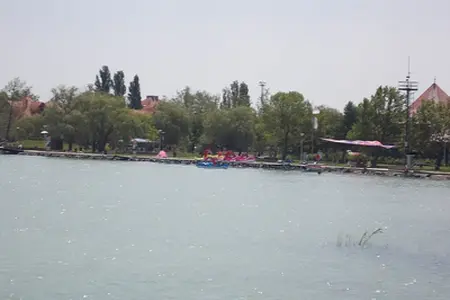
Several waterways shape Hajdúszoboszló’s geography. The Kösely stream crosses the settlement, and the water of the Boating Lake also flows into it. West of the town lies the Eastern Main Canal, which is farther from the spa’s central area and therefore easier to include in a sightseeing trip by car. These places show another side of the Great Plain setting and the town’s hydrology.
Parking in Hajdúszoboszló
Hajdúszoboszló has several paid parking zones, and the hourly fee varies by zone. Payment is required every day, including weekends and public holidays, so always check the on-site information after parking. Detailed information can be found on the city’s parking page.
The parking zone search also helps identify the correct area. The advantage of mobile parking is that you do not need to look for a parking meter or coins; you can start parking directly from your phone.
- 4201 – Hajdúszoboszló Zone 1: 400 Ft/hour (every day 07:00–20:00)
- 4203 – Hajdúszoboszló Zone 3: 200 Ft/hour (every day 07:00–20:00)
The fees are valid based on data from Nemzeti Mobilfizetési Zrt. at the time of publication of the article.
Tip: If Hungarospa is your main destination, look for a legal parking space near the spa, then explore Szent István Park, the statue of Ferenc Pávai-Vajna, and the Bell House on foot. Remember that the paid period applies every day, including weekends and public holidays.Parking can be started on site in a few clicks, instantly, online from your phone, without a parking meter, cash, or app installation.
The above information is for informational purposes only and may differ from the actual data in certain cases. To view the current daily parking fees, please click the link below!
HAJDÚSZOBOSZLÓ Parking zone information: 10-13-2026

Fotó: Own work / Wikimedia Commons (CC BY-SA 3.0)